2026 Workshops
The EcoFarm Conference offers four+ days of more than 60 skill-building workshops in English and Spanish, keynotes, pre-conference events, farm tours, seed swaps, tastings, networking, and expo!
Check out the lineup of workshops from our 2026 conference below.
WEDNESDAY, JANUARY 21, 2026
Keynote: 8:00-9:45pm
-
Nature absolutely knows how to pack a punch. It has placed the capacity for transformation, abundance, and sustenance within the tiny clutches of a seed. When the conditions are right, seeds become new worlds. Nature designed humans with the same exponential transformational power. When conditions are right, we thrive. This keynote invites us to reflect on a central question: How are we creating the conditions for seeds to show us their full capacity? Using this metaphor, we will explore what it means to create spaces where people can grow and flourish deeply in their communities.
Carlton Turner is an artist, agriculturalist, builder, researcher, and co-founder/co-director of the Mississippi Center for Cultural Production (Sipp Culture). He has more than 20 years of organizational development and management experience working in the arts and culture sector. He currently serves on the board of First People’s Fund, Grantmakers in the Arts, College Unbound, and the National Black Food and Justice Alliance. Carlton is a founding partner of the Intercultural Leadership Institute and the former Executive Director of Alternate ROOTS and a lead partner in the Southern Black Farmer Community Led Fund. He lives and works in Utica, MS where his family has been rooted for eight generations. Spanish interpretation provided.
THURSDAY, JANUARY 22, 2026
Session A: 8:30-10:00am
-
Location: Merrill Hall
Crop Management CEUs: 1.5
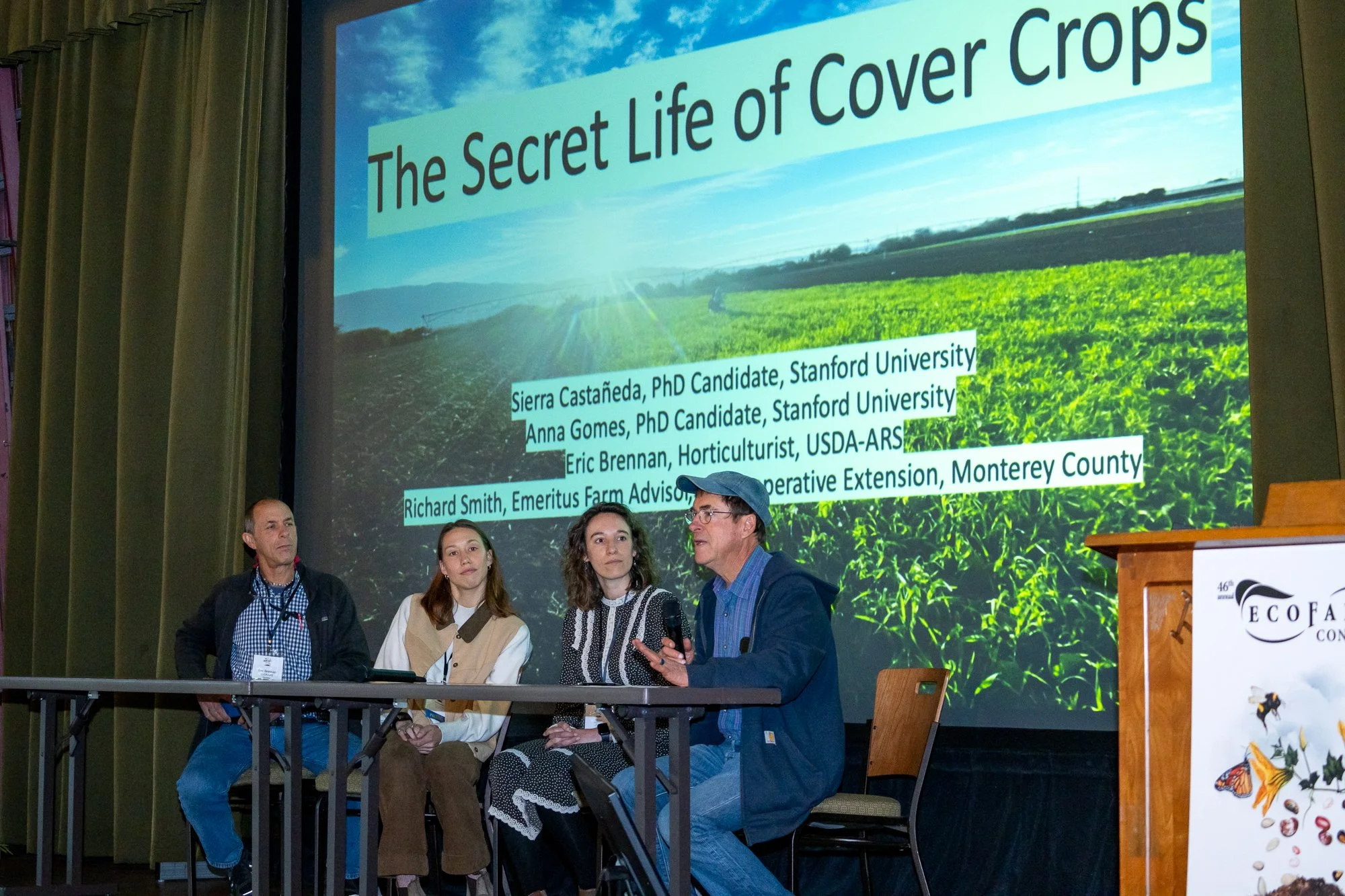
Cover cropping is a fundamental practice that can provide and cycle nutrients to crops, reduce winter runoff, improve soil tilth, increase soil organic carbon, bolster overall soil health, and suppress soilborne diseases. This session will explore the hidden roles that cover crops can play to maximize their beneficial impact on soils through optimal management decisions. Speakers will share their experiences working with many aspects of cover crops and discuss what they have learned about the impact of planting dates, planting density, termination timing, and risk of seed set by the cover crop and associated weeds. Participants will be encouraged to share their experiences and discuss strategies for maximizing the benefits of cover crops in their farming systems.
Moderator: Richard Smith, University of California Cooperative Extension, Monterey and Santa Cruz Counties (emeritus), Aromas, CA
Speakers: Eric Brennan, USDA Agricultural Research Service, Salinas, CA; Anna Gomes, Stanford University, Palo Alto, CA; Sierra Casteñeda, Stanford University, Palo Alto, CA
-
Language: English with Spanish Interpretation
Location: Chapel
Integrated Pest Management CEUs: 1.5,
PCA Units: 1.5
Gophers, voles, rats, and ground squirrels take a huge toll in agriculture—sometimes destroying as much as 10 to 50 percent of crops. Thomas Wittman has worked on this issue for more than forty-five years and has developed innovative methods and tools to reduce crop damage by managing pest populations in several ways. Lethal trapping is sometimes necessary, and the most effective traps and techniques will be presented. Field barriers, the integration of pest predators, and field rotations are major components of reducing problems. Often, we can take advantage of the target species' natural activities, habits, and fears. Solutions for rat control in the electrical systems of farm vehicles and machinery will also be presented.
Speaker: Thomas Wittman, Gophers Limited Wildlife Control and Equipment, Santa Cruz, CA
-
Location: Fred Farr
Sustainability CEUs: 1.5
Agrivoltaics—the intentional integration of solar energy generation and agriculture—offers a promising path toward climate resilience, water conservation, diversified farm income, and land-use efficiency. But what does this look like in practice for farmers and ranchers? This workshop introduces the fundamentals of agrivoltaics, explores potential benefits and trade-offs, and highlights current research and pilot projects across the state. This session grounds the conversation in both science and lived experience. Participants will gain a deeper understanding of how agrivoltaics could fit into our nation’s agricultural future and will have an opportunity to ask questions, share concerns, and connect with others interested in this emerging field.
Moderator: Greg Plotkin, American Farmland Trust, Sonoma County, CA
Speakers: Rose Olivas, MS, Robert Redford Conservancy for Southern California Sustainability, Pitzer College, Claremont, CA; Angel S. Fernandez Bou, Union of Concerned Scientists, Merced, CA; Sarah Kurtz, PhD, University of California, Merced, Merced, CA
-
Location: Kiln
For years, organic farming education and technical support were powered by farmers themselves and a grassroots network of passionate volunteers and nonprofits. That changed in 2022 when the USDA invested $100 million into the Transition to Organic Partnership Program (TOPP)— a game-changer for farmers committed to sustainability and soil health. This investment created a nationwide network of farmer-led organizations, extension services, and paid organic mentors in every state—farmers helping farmers. The goal? To make transitioning to organic more accessible, practical, and community driven. This big-tent approach has brought organic know-how to new audiences, uncovered systemic challenges, and sparked conversations about what’s next for the movement. Join us to explore the creation and impact of this network, hear stories from the field, and dig into the real barriers that still stand in the way of bringing more farmers into organic. Together, we’ll discuss how organic farms can lead the way in shaping a resilient future.
Moderator: Mark Lipson, Molino Creek Farming Collective, Davenport, CA
Speakers: Jenny Lester Moffitt, American Farmland Trust, Davis, CA; Jen Rose Silverman, Rodale Institute, Embudo, NM; Christian Zuckerman, Hawai’i Farmers Union United, Waianae, HI
-
Language: Spanish
Ubicación: Nautilus
Desarrollo Profesional CEU: 1,5
Señor agricultor, señora agricultora, tiene listo su plan de preparación para desastres? Tiene su plan de comunicación, de evacuación y su plan de tareas a realizar en la finca en caso de un desastre natural? Tiene preparado un plan financiero y un plan de recuperación después del desastre? Tiene escenarios posibles de cómo se verá afectado el flujo de caja de su negocio? Tiene registros de las herramientas y maquinaria de su negocio? Tiene al día sus seguros? Conoce cuáles programas tiene el gobierno para apoyarle en su recuperación? Cuáles son los requisitos mínimos que debe cumplir para tener acceso a esos programas? Si la respuesta a cualquiera de estas preguntas es NO, por favor únase a este taller donde de manera didáctica y amena planeamos responder algunas de estas preguntas.
Moderadora: Ana C. Galvis-Martinez, Farmer Campus en colaboración con California FarmLink and American Farmland Trust, Quilcene, WA
Ponentes: Maria Catalán, Catalán Family Farm, Hollister, CA
-
Language: English with Spanish Interpretation
Location: Triton
Professional Development CEUs: 1.5
For generations, the story of farmland in California has been one of exclusion and erasure—first through outright theft and discriminatory policies that blocked Black, Indigenous, and other farmers of color from owning land, and now, through corporate takeovers that treat our fields as investment opportunities rather than community resources. As we watch almond orchards replace grasslands, warehouses swallow fertile soil, and entire valleys become financial assets for distant investors, several farmers, advocates, and community leaders are developing local and state-level policy solutions aimed at land reform. This workshop explores:
How historical injustices have contributed to today's crisis of consolidation
Current threats, such as investor land grabs and rapid consolidation
How state-level policy and community-led solutions are paving the way toward reform
Moderator: Antonio Roman-Alcalá, California State University, East Bay, Hayward, CA
Speakers: Jamie Fanous, Community Alliance with Family Farmers; Agustin Vega, Central Coast Alliance United for a Sustainable Economy; Veronica Mazariegos-Anastassiou, Brisa Ranch, Pescadero, CA; James Nakahara, Kitchen Table Advisors, Santa Cruz, CA
-
Location: Scripps Create a thriving, self-sustaining garden in any climate by using permaculture landscaping principles. Even with little prior experience, anyone can turn their garden space into an abundant, eco-friendly ecosystem that produces vegetables, herbs, and fruits while also building healthy soil, supporting pollinators such as bees and butterflies, capturing and storing water naturally, and addressing pest problems holistically. Seasoned experts in permaculture and gardening will discuss ecological landscape stewardship as a way to protect against pollution and reduce waste.
Moderator: Ken Foster, Terra Nova Ecological Landscaping and Cabrillo College, Santa Cruz, CA
Speaker: Penny Livingston, Regenerative Design Institute, Bolinas, CA
-
Location: Toyon
Crop Management CEUs: 1.5
The California Department of Food and Agriculture (CDFA) staff—representing the Farm to School, Urban Agriculture, and Food Hubs programs— and current CDFA grantees will discuss how to successfully tap into state funded grant opportunities and share the positive impacts they are making for California farmers.
Moderator: Michael Ackley-Grady, California Department of Food and Agriculture, Farm to School Program, El Dorado, CA
Speakers: Christina Harrington, California Department of Food and Agriculture, Food Hubs Program, Davis, CA; Donald Sherman, Sherman Produce Market, Fresno, CA
Session B: 10:30-12:00pm
-
Location: Merrill Hall
Crop Management CEUs: 1.5
Zach Barnes of Dole Fresh, aims to dramatically boost cover crop adoption across the Salinas Valley by bringing growers together to share knowledge and practical approaches for integrating more cover crop acreage—more consistently—into both conventional and organic systems. Learn practical strategies focused on selecting cover crop varieties, timing and methods for planting, termination, and incorporation (mechanical and chemical options); and common pitfalls to avoid. Attendees will learn what to measure—soil health indicators, biomass, moisture, yield, pest pressures, and input costs—and how to use that data to adapt practices. The session format includes grower-led case studies, an expert panel, and an interactive Q&A and data discussion to interpret results and refine plans, with actionable takeaways and opportunities for peer collaboration to scale adoption.
Moderator: Taylor Van Rossum, California Marine Sanctuary Foundation, Monterey, CA
Speakers: Zach Barnes, Dole Fresh, Salinas, CA; Kyle Harmon, Braga Fresh, Salinas, CA; Kim Horton, Taylor Farms, Salinas, CA; Gina Colfer, Wilbur-Ellis, Salinas, CA
-
Location: Chapel
Diversity—in ecosystems, in agriculture, and in our gardens—brings resilience. Likewise, diversity in our human communities fosters generativity and creativity. Immigrants are vital to agriculture, traditional ecological knowledge is key to teaching us how to tend our wildlands, and people of all races and backgrounds contribute to our culture. How do we cultivate diversity in a time of heightened racism and polarization? How can we continue moving forward without losing ground in our efforts to build inclusion? How can we bridge the divides that separate us and work together to regenerate both land and community?
Speakers: Starhawk, Earth Activist Training, San Francisco, CA; Wanda Stewart, Common Vision, Berkeley, CA
-
Location: Fred Farr
Crop Management CEUs: 1.5
Resilient farms start with resilient seed. Presenters will draw on decades of experience to share practical steps for producing, cleaning, and storing organic seed, while introducing straightforward approaches to variety trials and basic plant breeding. Attendees will gain tools to select and steward locally adapted varieties that improve crop performance, strengthen climate resilience, and support long-term farm success.
Speaker: Jared Zystro, Organic Seed Alliance, Arcata, CA
-
Language: Spanish
Ubicación: Kiln
Las granjas resilientes comienzan con semillas resilientes. Los presentadores compartirán información sobre décadas de experiencias, investigación y educación en producción de semillas y abordarán pasos prácticos para producir, limpiar y almacenar semillas orgánicas, además de introducir enfoques sencillos para ensayos de variedades y mejoramiento básico de plantas. Los participantes también aprenderán cómo la selección y el manejo de semillas adaptadas localmente tienen el potencial de mejorar el rendimiento de los cultivos, fortalecer la resiliencia climática y apoyar el éxito a largo plazo de las fincas.
Ponentes: Ana Galvis, Organic Seed Alliance, Port Townsend, WA; Emigdio Ballon, Traditional Agricultural Consultant, Espanola, NM
-
Language: English with Spanish Interpretation
Location: Nautilus
The Vinguard and Líderes Campesinas collaborated on a wine label to launch the "Guardian Vital" initiative aimed to draw attention to vineyard workers/stewards working behind the scenes and ensure fair and safe work practices. Those who pick grapes are often in the shadows, are subjected to hazardous working conditions, and do not have job security or opportunities for advancement in the wine industry and are amongst the most marginalized in our society. In addition to environmentally friendly practices, "Guardian Vital" participating wineries must guarantee that workers whose labor goes into making their wines have safe workspaces, are paid fairly, and are treated with dignity, respect, and potential.
Moderator: James Nakahara, Kitchen Table Advisors, Santa Cruz, CA
Speakers: Louis Semus, The Vinguard, San Francisco, CA; Irene De Barraicua, Lideres Campesinas, Sacramento, CA
-
DISCUSSION GROUP
Language: English with Spanish Interpretation
Location: Triton
Explore how farmers can transform seasonal and surplus produce into value-added goods—from jams and ferments to sauces, pickles, and dried products. This session will include shared experiences with different preservation techniques and guidance on navigating processing—whether on-farm, through cottage food laws, or in shared commercial kitchens. What’s worked for you? What challenges have you faced? With Todd’s twenty years of hands-on experience preserving farm-fresh produce and Yonatan’s support for new small-batch processors in the Central Valley, we’ll explore successful models for value-added production. This discussion space welcomes ideas exchange, questions, and connection among those exploring value-added opportunities. Whether you're just starting out or already selling, bring your stories, curiosity, and questions!
Co-Facilitators: Todd Champagne, Happy Girl Kitchen Co., Pacific Grove, CA; Yonatan Weinberg, University of California Agriculture and Natural Resources, Fresno, CA
-
Location: Scripps
Two recent state laws—Senate Bill (SB) 1383 and Assembly Bill (AB) 1201—have impacts that organic farmers are experiencing now or will in the near future. SB 1383 requires every city and county in California to purchase and distribute a certain amount of compost or mulch annually. San Mateo County has developed an innovative compost program that helps jurisdictions meet procurement targets by providing reduced-cost compost to local farms and ranches. AB 1201, enacted in 2021, addresses products labeled as compostable or home compostable. The bill, whose deadline was recently extended, now states that as of June 30, 2027, products may not be labeled as compostable in California unless they are “an allowable agricultural organic input under the requirements of the USDA National Organic Program (NOP).”
Moderator: Zea Sonnabend, Fruitilicious Farm and EcoFarm Planning Committee, Watsonville, CA
Speakers: Doug Millar, San Mateo Resource Conservation District, San Mateo, CA; Matt Cotton, Integrated Waste Management Consulting, Richmond, CA; Kasey Butler, Resource Conservation District of Monterey County, Monterey, CA; Veronica Mazariegos-Anastassiou, Brisa Ranch, Pescadero, CA
-
Location: Evergreen
This session invites EcoFarm participants to explore how communities are reclaiming their food systems through grassroots leadership, regenerative practices, and place-based solutions. Drawing on real examples—such as community gardens addressing food apartheid and urban spaces transformed into food forests—participants will engage in a hands-on, participatory workshop that blends innovation, storytelling, and collaborative scenario-building. Together, we will imagine just, resilient, and circular food futures rooted in land stewardship and community power. Participants will surface local needs, identify opportunities for partnership, and co-create practical ideas that can be carried back to farms, organizations, and regional networks, strengthening our shared movement for food sovereignty and ecological resilience.
Co-Facilitators: Margaret To, Soil to Soul, Los Angeles, CA; Jahnavi Mange, From Soil To Soul, Sunnyvale, CA
-
Location: Oak Shelter
Professional Development CEUs: 1.5
A diverse supply chain incorporates suppliers of all scales and all backgrounds. It draws from multiple regions and sectors and is inherently more resilient. However, more and more buyers are choosing to reduce rather than expand their supplier base. At the same time, some innovative growers, and visionary wholesalers are finding ways to expand the participation of typically excluded producers and to build a diverse organic ecology in which everyone can thrive. Join us as we share stories of challenges met, obstacles overcome, and new possibilities created.
Moderator: David Weinstein, CheshireWolf Services,Corvallis, OR
Speakers: Byron Albano, Cuyama Orchards, Cuyama, CA; Laurent Gabrielli, Heath and Lejeune, Los Angeles, CA; Nick Moless, Whole Foods Market, Watsonville, CA
-
Location: Heather
This workshop is for farmer-landholders who have identified their successors and those landholders who have not yet identified who will be the next generation of farmers on their land. Bring your family members and ranch manager to this multigenerational workshop on land transfer and succession planning. We will explore challenges of farm succession from both the retiring and aspiring generations’ perspectives and consider farm legacy through legal and financial lenses, as well as from a heart-centered approach that supports family dynamics and farms facing uncertain futures. Participants will be guided through a brief overview of how to use a land transfer toolkit independently, or how to connect with a land transfer navigator (a trained succession planner) to assist in the process. This toolkit will be one of several resources shared during this workshop.
Moderator: Paul Lum, American Farmland Trust, Solano County, CA
Speakers: Claudia Kenny, American Farmland Trust, Chatham, NY; Liya Swartzman, California FarmLink, Sacramento, CA; Deborah Nares, American Farmland Trust; Coachella Valley, CA
Keynote: 1:30-2:45pm
-
A strategic dialogue on immigrant farmworker and farmer rights, featuring Martita Martinez-Bravo (Executive Director of Friends of Fieldworkers, Inc.), Paul Underhill (Terra Firma Farm, Winters, CA), and another speaker to be announced. This panel will examine the legal, workplace, and community frameworks needed to safeguard farmer & farmworker immigrants across California’s agricultural systems, highlighting collective efforts that help keep immigrant families and communities safe and together. Spanish interpretation provided.
-
Location: Chapel
As food-as-medicine interventions gain traction in health care—from produce prescriptions to medically tailored meals—many programs are scaling rapidly. Yet much of this growth overlooks a critical component: where the food comes from and how it’s produced. California’s organic farmers and community-based nonprofit food-as-medicine providers are increasingly being sidelined by large, out-of-state distributors offering conventionally sourced products. When sourcing is overlooked, food-as-medicine programs may fall short—not only in healing people, but also in supporting the farmers who grow nourishing food.
This workshop will explore challenges and opportunities to advance sourcing in California's Food as Medicine policies. Whether you're a farmer, food as medicine provider, healthcare professional, or advocate, this session offers a space to gain insights and discuss policy advocacy solutions to ensure that healthy organic food is at the center of food as medicine.
Moderator: Laetitia Benador, California Certified Organic Farmers, Santa Cruz, CA
Speakers: Dr. Steven Chen, Chief Medical Officer, Alameda County Recipe4Health, Alameda County, CA; Cathryn Couch, Ceres Community Project, Sebastopol, CA; Heather Latino, Clinical Instructor, Harvard Law School Food Law and Policy Clinic, Boston, MA; Ellie Igoe, Foodshed, San Diego, CA
-
Language: English with Spanish Interpretation
Location: Kiln
Learn about the resources and support that small farmers need to build a successful and profitable operation while being resilient and viable into the future. Panelists—including farmers and organizational leaders—will share practical information, common challenges, success stories, and insights into networks that help farmers access long-term, stable markets. Farmers from the Agricultural Platform Collective (APC) will share their personal and business journeys, challenges faced, and how they’ve brought family members into their operations to build toward long-term sustainability.
Moderator: Rizpah Bellard, Farmer Partnerships Manager, Office of Kat Taylor/Agricultural Platform Collective, Fresno, CA
Speakers: Saira Ambriz, Ambriz Farms, Sanger, CA; Kao Youa Moua, Vang Farming Ventures, Fresno, CA; Pahoua Lee, Office of Kat Taylor/Agriculture Platform Collective, Sausalito, CA; Gary Moua, GG Farms, Fresno, CA
-
Location: Fred Farr
Nutrient Management CEUs: 1.5
No single metric can quantify soil health; instead, multiple indicators combine to create a complete picture. With so many testing options available, how do you know which ones to use? Are they accurate? How can you apply them to improve soil health? In this workshop, we’ll explore both laboratory and in-field soil health tests, discussing their benefits, drawbacks, and usage.
Moderator: Margaret Lloyd, University of California Cooperative Extension, Yolo, Woodland, CA
Speaker: Lindsey Klein, University of California Cooperative Extension, Woodland, CA
-
Language: Spanish
Ubicación: Nautilus
Las prácticas vegetativas pueden desempeñar un papel importante en la mejora de la calidad del agua en las cuencas hidrográfi cas predominantemente agrícolas. En este taller en español, los expertos profundizarán en tres prácticas vegetativas:
1. Zanjas vegetadas
2. Cercas vivas
3. Cultivos de cobertura
Los tratamientos vegetativos mejoran la salud del suelo y ayudan a los agricultores a cumplir los requisitos establecidos por la Orden Agrícola 4.0 de la forma más economica. Tras las presentaciones, un panel de agricultores hablará sobre sus experiencias con la implementación de prácticas vegetativas y las lecciones aprendidas. No se lo pierda.
Moderadora: Jazmine Mejia-Muñoz, California Marine Sanctuary Foundation, Monterey, CA
Ponentes: Kasey Butler, Resource Conservation District of Monterey County, Monterey, CA; Sacha Lozano, Resource Conservation District of Santa Cruz County, Santa Cruz, CA
Panel de Agricultores: Braga Fresh y dos pequeños productores de Salinas, Corralitos y Santa Cruz, California.
-
Language: Spanish with English Interpretation
Ubicación/Location: Triton
Los principios, el marketing y los sistemas de producción orgánica han madurado significativamente, mientras que el movimiento regenerativo sigue ganando atención. ¿Cuáles son las principales diferencias y similitudes desde las perspectivas de producción y comercialización? ¿Deberían los productores buscar diferenciar sus operaciones mediante una certificación regenerativa? ¿Cómo perciben los compradores y consumidores estas afirmaciones sobre los productos? ¿Qué papel desempeña la producción de frutas y verduras en el debate sobre la regeneración? Estas son algunas de las preguntas que exploraremos, junto con quizá la más importante: ¿Qué podemos aprender unos de otros? Este movimiento de producción ecológica y consumo responsable será más eficaz si perseguimos juntos los objetivos comunes frente a los diversos desafíos compartidos.
Organic principles, marketing, and production systems have matured significantly, while the regenerative movement continues to grow. What are the key similarities and differences—from both production and commercial perspectives? Should growers seek to differentiate their operations through regenerative certification? How do buyers and consumers perceive these claims, and where does specialty crop marketing fit into the broader regenerative conversation? We’ll also explore what current market data reveals and, perhaps most importantly, what we can learn from one another. The good food movement will be stronger as we pursue shared goals and confront common challenges together.
Moderador/Moderator: Evan Storey, Elevated Foods, Ensenada, Baja California
Ponentes/Speakers: Tony Serrano, JAS Family Farms, Hollister, CA; Ben Hartman, Sungold Consulting, San Francisco, CA; Paul Alvarez, Regenerative Organic, Alameda, CA
-
Location: Scripps
Crop Management CEUs: 1.5
Even amid political uncertainty, federal regulations shaping organic food and farming remain critical to follow. The staff at the National Organic Program (NOP) has been shrinking, and relocation to the midwest may be on the horizon. Funding for various programs remains inconsistent, and the future of the Farm Bill is still unclear. Hear directly from the groups who track organic policy in Washing, D.C., and get the latest on where things stand.
Moderator: Zea Sonnabend, EcoFarm Planning Committee, Watsonville, CA
Speakers: Tom Chapman, Organic Trade Association, Washington D.C.; Abby Youngblood, National
Organic Coalition, Arlington, MA: Lillian Hawkins, Organic Farmers Association, Washington D.C.
-
Location: Evergreen
Professional Development CEUs: 1.5
When Thaddeus Barsotti and his brothers inherited their late mother’s legacy organic farm and fledgling CSA business in 2000, they transformed it into Farm Fresh to You—a farm-to-doorstep distribution powerhouse now serving over 30,000 customers across three western states. Recently acquired by Raley’s Supermarkets, the enterprise continues to evolve as Thaddeus explores a “2.0” scheme that employs modern technology to build a transparent food system where farmers are equitably compensated for their distinctive production methods, and consumers can confidently invest in values-aligned food. This workshop examines how money currently flows through a fragmented food system that often rewards marketing over substance—and envisions a future where direct, tech-enabled connections between growers and eaters replace greenwashing with accountability and trust. Join Thaddeus for this visionary, interactive session exploring pathways to a fairer food economy.
Moderator: Tom Willey, TD Willey Farms, Madera, CA
Speakers: Thaddeus Barsotti, Farm Fresh To You and Capay Organic, Winters, CA; Bianca Kaprelian, Fruit World, Reedley, CA
-
Location: Oak Shelter
Integrated Pest Management CEUs: 1.5,
PCA Units: 1.5
Learn how insect-eating Western Bluebirds and Tree Swallows contribute to integrated pest management of Blue-green Sharpshooters, leafhoppers, Three-cornered Alfalfa Hoppers, Vine Mealybugs and various other agricultural pests. Guidance will be provided on habitat needs and on installing and maintaining nest boxes. Drawing from the Wild Farm Alliance’s Nesting Structures for Beneficial Birds guide, this session provides science-based recommendations for design, placement, and upkeep—offering practical strategies to integrate songbird conservation into crop systems, enhance biological control, and diversify pest management approaches.
Moderator: Jo Ann Baumgartner, Wild Farm Alliance, Aromas, CA
Speaker: Matt Johnson, California Polytechnic University, Humboldt, Arcata, CA
-
Location: Heather
Crop Management CEUs: 1.5
Avocados, native to Mexico and Central America,are in high demand—but they can be challenging to produce successfully. In this session, we’ll discuss the practical aspects of producing avocados on a small commercial scale. While the popular Hass variety will be addressed, several new varieties suitable for direct-market operations will also be introduced. We’ll focus on low-input, water-wise, organic cultural techniques, and explore expansion
into regions newly suitable for production. Additional topics will include pollination, propagation, pruning, harvesting, and marketing.
Moderator: Richard Smith, University of California Cooperative Extension, Monterey and Santa Cruz Counties (emeritus), Aromas, CA
Speakers: Freddy Menge, Epicenter Nursery, La Selva Beach, CA; Ellen Baker, Epicenter Nursery, La Selva Beach, CA; Greg Alder, California Avocado Society, San Diego, CA
-
Location: Acacia
What does it really take to build a thriving, resilient CSA? This session brings together farmers with both fresh perspectives and decades of experience to share practical insights on crop planning, marketing, member retention, pricing, scaling, and adapting to changing climates and customer needs. Whether you’re new to Community Supported Agriculture (CSA) or looking to strengthen your program, you’ll leave with actionable strategies and renewed inspiration to apply directly to your farm.
Moderator: Ari Memar, Farmhand, San Francisco, CA
Speakers: Elizabeth Kaiser, Singing Frogs Farm, Sebastopol, CA; Melanie Cunningham, Shakefork Community Farm, Carlotta, CA; Elaine Swiedler, Full Belly Farm, Guinda, CA
-
Location: Toyon
Discussion Group
Join a discussion on the California Agricultural Land Equity Task Force’s newly released report of recommendations for equitable land access
in agriculture and traditional Tribal uses. After thirty-two public meetings and an in-depth engagement process with producers and Tribal land stewards statewide—from October 2023 through December 2025, including a listening session at EcoFarm 2025—the Task Force is excited to share its fi nal recommendations with everyone who may play a role in advocating for, adopting, implementing, and, most importantly, benefitting from these policy ideas. This session will also provide updates on the work ahead and next steps. Please come ready to share ideas, brainstorm, and engage in an active discussion about stable, secure land access. The Task Force’s final report of recommendations was submitted to the Governor and State Legislature in December 2025.
Co-Facilitators: Tessa Salzman, Strategic Growth Council (SGC) California, Ventura, CA; Doria Robinson, Urban Tilth, Richmond, CA; SGC California Agricultural Land Equity Task Force member, Irene De Barraicua, Lideres Campesinas, Sacramento, CA
Session C: 3:30-5:00pm
FRIDAY, JANUARY 23, 2026
Keynote: 8:30-10:00am
-
An EcoFarm tradition! Learn what these farmers do, why they do it, and what they’ve learned along the way. Speakers to be announced soon. Spanish interpretation provided.
Session D: 10:30-12:00pm
-
Location: Merrill Hall
Crop Management CEUs: 1.5
Let’s talk about organic weed management! In this workshop, you’ll hear from a University of California extension specialist and two experienced organic mixed-vegetable farmers—representing different scales of farming—about how they manage weeds. Short presentations will be followed by a panel discussion and Q&A. We’ll explore organic weed management strategies including seed bank management, favorite cultivation tools, timing, and lessons learned. Be prepared to share your own strategies, ask questions, and connect with other farmers. Bring a packed lunch and if there’s interest we’ll continue the conversation outside, sharing ideas after the workshop ends.
Moderator: Katharina Ullmann, University of California Agriculture and Natural Resources (UCANR), Davis, CA
Speakers: Steve Fennimore, Emeritus Extension Specialist, UC Agriculture and Natural Resources, Salinas, CA; Scott Park, Park Farming Organics, Meridian, CA; Tom Broz, Live Earth Farm, Watsonville, CA
-
Location: Chapel
Dig into a conversation that follows the deep roots of food sovereignty to sow futures with intention. Explore how California Natives are reclaiming foodways and shaping the future of food sovereignty in the state. Meet a growing cohort of Indigenous Food Sovereignty State Advocates and learn how new state programs—such as the California Department of Food and Agriculture’s Tribal Food Sovereignty Program—are beginning to respond to the need for infrastructure, land access, and food security. What does Tribal Food Sovereignty really mean, and where does the idea come from? What infrastructure is needed to grow it? And how can the state—and all of us—benefit from investing in California Natives? Farmers, technical assistance providers, and food system advocates all bring different roots, but share common needs. Whether Indigenous, Black, Brown, or white, we all seek just food systems that ensure healthy land and people. Show up if you are ready to act!
Moderator: Lena Ortega, Ft. Yuma Quechan Indian Tribe and Atsapáq, Quechan (Yuma) traditional territory
Speakers: Jill Sherman-Warne, Hoopa Valley Tribe and Native American Environmental Protection Coalition, Hoopa Valley traditional territory; Emily Burgueno, Iipay Nation of Santa Ysabel, Maat Hetemii, Strategic Growth Council California Agricultural Land Equity Task Force, Iipay / Kumeyaay traditional territory; Yaynicut Franco, Wukchumni Yokuts, Wukchumni Tribe, Wukchumni Yokuts traditional territory
-
Language: English with Spanish Interpretation
Location: Fred Farr
Integrated Pest Management CEUs: 1.5
Soilborne diseases such as Verticillium, Fusarium, and Pythium can greatly reduce yields in vegetable crops—and can persist in the soil for many years, lowering long-term productivity. Organic producers must rely on practices that build soil organic matter to feed beneficial organisms that compete with pathogens. Using composts, specific cover crops, and crop rotations can all help, as can resistant varieties tailored to particular diseases. Year-to-year fluctuations in disease pressure also influence outcomes. This session will review soilborne disease biology, management practices, and strategies for maintaining productive soils in organic vegetable systems.
Moderator: Richard Smith, University of California Cooperative Extension (UCCE), Monterey and Santa Cruz Counties (emeritus), Aromas, CA
Speakers: Yu-Chen Wang, UCCE, Monterey County, Salinas, CA; Margaret Lloyd, UCCE, Yolo County, Woodland, CA
-
Location: Kiln
This workshop explores how food hubs can collaborate—not only with each other through networks—but also with wholesalers to better serve diverse markets and scale impact for local producers. Join a dynamic panel of food system leaders—including experienced food hubs, wholesale distributors, and food hub network representatives—as they share real-world examples of collaboration, highlight key synergies and differences in business models, and discuss opportunities for working
together. Whether you're a new food hub, a seasoned distributor, a producer, or a buyer, this session will offer practical insights into building distribution partnerships that strengthen local and regional food supply chains across California.
Moderator: Christina Harrington, CA Department of Food and Agriculture, Davis, CA
Speakers: Amy McCann, Local Food Marketplace, Eugene, OR; Dylan Stein, FEED Cooperative, Petaluma, CA; Steve Dustin, GreenLeaf, Brisbane, CA
-
Language: Spanish with English Interpretation
Ubicación/Location: Nautilus
Agricultores latinos con mucha experiencia compartirán sus valiosos consejos y vivencias sobre cómo tener éxito en la agricultura. Esta sesión será más una charla que una presentación formal, tocando temas como producción, negocios, marketing y cualquier otro tema que el público quiera discutir. Los agricultores seleccionados contarán historias sinceras sobre sus trayectorias—lo bueno, lo malo y lo complicado—mostrando la resistencia y creatividad que se necesitan en el campo. Tendrás tiempo para hacer preguntas y conectarte con estos agricultores destacados.
Experienced Latino farmers share invaluable insights on what it takes to succeed in agriculture. This session is designed as a facilitated conversation rather than a formal presentation, covering production, business, marketing, and any topics the audience wishes to explore. These seasoned farmers will offer honest, first-hand accounts of their journeys—the good, the bad, and the muddy—illustrating the resilience and creativity that farming requires. You’ll have plenty of time to ask questions and connect with these hall-of-fame farmers.
Moderador/Moderator: David Mancera, La Cultiva, Oakland, CA
Ponentes/Speakers: Javier Zamora, JSM Organics, Las Lomas, CA; Yadira Mendiola, Queen of Vegetables Organic Farm, Watsonville, CA
-
Language: Spanish
Ubicación: Triton
Ayudando a los agricultores a saber qué aspectos considerar al evaluar un nuevo terreno, cómo estar financieramente preparados para comprar o arrendar, qué esperar al firmar contratos de arrendamiento y cómo es el proceso de compra.
Moderador: Anel Trujillo, American Farmland Trust, Fresno, CA
Ponentes: Laura Marquez, Kitchen Table Advisors, Fresno, CA;Asia Hampton and Laura Poline Gonzalez, California FarmLink, Aptos, CA; Deborah Nares, American Farmland Trust, Coachella Valley, CA
-
Location: Scripps
As human activities have become increasingly diverse, there has also been a rapid progression toward specialization and division of labor. Many experts point out that this has led to a kind of “disease of separation” within human society—particularly in the relationship between humans and nature. As science continues to advance, the divide between agriculture and medicine has widened. Therefore, it is critically important to explore ways to reconnect these two fields through what is known as “collaboration between agriculture and medicine” (nō-i renkei). In the town of Izunokuni in Shizuoka Prefecture, Japan, the Ohito Zuisenkyo facility puts this concept into practice through natural farming based on the philosophy that "true health lies in adapting to and respecting nature." This presentation will showcase examples of such practices and highlight findings from scientific research that reveal how soil health connects to the health of crops and humans through the natural environment.
Moderator: Tom Willey, TD Willey Farms, Madera, CA
Speaker: Hiroyasu Tabuchi, Institute for Agriculture, Medicine, and the Environment, Shizuoka, Japan
-
Location: Evergreen
Internship and apprenticeship programs are growing in popularity—especially on small farms—as pathways to agricultural careers. But how do farmers distinguish the difference between an intern, an apprentice, and an employee? Which type of role is most appropriate for your farm—or for you as a farmworker? This workshop explores the legal classifications of labor on small farms and the implications for both farm owners and workers.
Speakers: Gwilym Walker, North Coast Growers Association, Arcata, CA; Nicole Curiel, Center for Land-Based Learning, Woodland, CA
-
Location: Oak Shelter
Crop Management CEUs: 1.5
Using livestock to restore rangelands is an effective approach that mimics natural processes, enhances biodiversity, improves soil health, boosts water filtration, and supports animal welfare, among many other benefits. With over 700,000 acres of rangelands in the United States, regeneratively managed lands play a significant role in restoring diverse ecosystems. Let's hear from two operations that are successfully managing rangelands. Kristina and Jason Walker of Star Walker Organic Farms manage about 3,500 acres in Scott Valley California, raising highland cattle, hogs, and producing a variety of crops, including alfalfa, wheat, and peas. The Walkers prioritize the health of their soil and land through organic and regenerative practices, utilizing animals for natural fertilization and carbon storage. Joe and Julie Morris have been stewarding their land using holistic management in San Juan Bautista for more than 30 years and producing grass-fed beef. Their moto is ‘context’ is key. Holistic, regenerative land management is a set of principles that is not a one size fits all model. The Morris’ have been mentors to many grass-fed producers in Northern California.
Moderator: Kathy Webster, TomKat Ranch, Pescadero, CA
Speakers: Joe and Julie Morris, Morris Grassfed, San Juan Batista, CA; Kristina and Jason Walker, StarWalker Organic Farms, Fort Jones, CA
-
Location: Heather
This workshop highlights farm and garden programs that connect land-based education with community needs.
Homeless Garden Project: Farm-based training for people experiencing homelessness, including the release of a new manual developed with UC Santa Cruz’s Center for Economic Justice and Action.
California School District Programs: Partnerships that grow crops on unused district land while creating youth opportunities through classes, clubs, internships, and jobs.
Life Lab (Santa Cruz): Supporting K–6 educators with hands-on strategies, curriculum tools, and professional development models to bring science, nutrition, and environmental literacy into the garden classroom.
Speakers: Michael Ackley-Grady, California
Department of Food and Agriculture, California Wheat Commission, California Farm to School Grant Program grantee and farmer, Sacramento, CA; Regi Jones, Life Lab, Santa Cruz, CA; Darrie Ganzhorn, Homeless Garden Project, Santa Cruz, CA
-
Location: Toyon
Discussion Group
Looking to connect with a mentor—or interested in paying it forward to new farmers? This interactive discussion group explores effective mentorship in organic farming, featuring experienced mentors including Hansel and Sue Kern of Kern Family Farm. This session includes a "speed dating" component for participants to meet potential mentors and learn about on-farm mentorship opportunities. Through storytelling, practical insights, and honest reflection, participants will share what works—and what doesn’t—when mentoring the next generation of farmers. Topics include logistical considerations such as housing, meals, and daily schedules, as well as challenges like communication, boundary setting, and generational differences. Participants will leave with a clearer sense of how to create impactful, sustainable, and reciprocal mentorship experiences that support aspiring farmers.
Facilitators: Jenna Pollard, Worldwide Opportunities on Organic Farms USA, Finland, MN; Sue and Hansel Kern, Kern Family Farm, North Fork, CA
Session E: 1:30-3:00pm
-
Language: English with Spanish Interpretation
Location: Merrill Hall
Nutrient Management CEUs: 1.5
Nitrogen dynamics can be particularly challenging in organic systems because nitrogen sources are diverse and microbial mediated. This workshop will explore how to predict nitrogen release to meet plant demand from cover crops, organic matter, fertilizers, compost, and crop residues.
Moderator: Margaret Lloyd, University of California Cooperative Extension (UCCE)
Speakers: Scott Park, Park Farming Organics, Meridian, CA; Patricia Lazicki, UCCE,, Davis, CA
-
Language: English with Spanish Interpretation
Location: Chapel
Crop Management CEUs: 1.5
This hands-on workshop equips farmers and conservation professionals with practical tools for planning and implementing successful native plant hedgerows and other habitat areas. Participants will learn:
Key questions to ask when determining site location
A step-by-step planning and planting process
Estimated costs and sample plant lists
Irrigation, compost, and mulch guidelines
Strategies for sourcing native plants and accessing implementation resources
The session will also highlight the benefits of hedgerows for erosion control, slope stability, and fire safety when farms border wildland interfaces. Attendees will hear directly from a farm manager about installing and managing hedgerows and in-field annual plantings.
Moderator: Rich Casale, Natural Resources Conservation Service (NRCS) emeritus, Soquel, CA
Speakers: Sam Earnshaw, Hedgerows Unlimited, Aromas, CA; John McKeon, Taylor Farms, Salinas, CA
-
Location: Fred Farr
Urban farming is more than just growing food in the city—it’s a tool for community empowerment, climate resilience, and reclaiming space for health and justice. This interactive workshop explores the strategies and community impacts of practicing organic farming in urban environments. Learn how FarmerJawn and Black Farmer Fund are transforming vacant lots, rooftops, schools, and front yards into thriving farms that provide fresh, chemical-free food and spark social connection. Participants will gain insight into the deep and wide-reaching impacts that urban agriculture has on food systems and social justice.
Moderator: Briana Mills-Walker, FarmerJawn, Philadelphia, PA
Speakers: Christa Barfield, FarmerJawn, Philadelphia, PA; Karen Washington, Black Farmer Fund, NY; Olivia Watkins, Black Farmer Fund, NY
-
Location: Kiln
Soil & Water Management CEUs: 1.5
Groundwater provides between 40–60% of California’s annual water supply, making it vital for drinking water, agriculture, and ecosystem health. As surface water and snowmelt fluctuate with climate change, reliable groundwater access becomes even more essential—especially for small farms and rural communities. This session will help participants understand how groundwater is managed, examine the specific impacts on small and mid-sized farmers, and explore current legal and environmental challenges. Hear firsthand from a Groundwater Sustainability Agency, a farmer, and an outreach specialist. Whether you’re a farmer, landowner, policymaker, or simply curious about California’s water systems, this workshop will equip you with tools to navigate the legal, environmental, and practical dimensions of groundwater management.
Moderator: Catherine Van Dyke, Community Alliance with Family Farms, Berkeley, CA
Speakers: Ngodoo Atume, University of California Agriculture and Natural Resources Small Farm Network, Davis, CA; Aaron Fukuda, Tulare Irrigation District, Tulare, CA; Sadie Morris, Oak Slough Farm and Community Alliance with Family Farms, Red Bluff, CA
-
Language: Spanish with English Interpretation
Ubicación/Location: Nautilus
La Agricultura Natural del filósofo Mokichi Okada se originó en Japón alrededor de 1935, cuando Okada comenzó a practicar en Gyokusenkyo, Tokio, mientras ofrecía terapia a sus pacientes. La primera publicación de Okada sobre Agricultura Natural se difundió en 1935. Desde entonces, se ha expandido por todo Japón y a dieseis países más, incluidos Estados Unidos. Desde 1999, la Mokichi Okada Asociación opera un prototipo de Agricultura Natural de cuatro hectáreas en Clovis, CA, cultivando frutas de hueso, cítricos y verduras. El sistema de agricultura natural de Okada busca transitar de la dependencia del compost hacia una manera de trabajar en armonía con la naturaleza, regenerando el suelo a su estado nativo y intensificando la calidad y el valor nutricional de los alimentos cosechados. MOA fue pionera en el movimiento “Alimento como Medicina” en Japón hace unos 90 años, operando una docena de clínicas vinculadas a cientos de granjas certifi cadas. MOA colabora con los gobiernos de Japón y Tailandia para aumentar la proporción de tierras agrícolas dedicadas a sistemas regenerativos al 25% hacia mediados de este siglo. Este taller en español cubrirá investigaciones de Japón sobre suelo vivo, su estructura, cultivo mínimo y mejora del sistema radicular. Se demostrará cómo estas técnicas pueden mejorar la densidad de los alimentos e integrar la ciencia de la Agro-Medicina.
Philosopher Mokichi Okada’s Natural Farming originated in Japan in 1931 and has since expanded to fourteen other countries, including the United States. Since 1999, the Mokichi Okada Association (MOA) has operated a ten-acre Nature Farming prototype in Clovis, CA, growing stone fruits, citrus, and vegetables. Okada’s austere system of organic farming seeks to regenerate soil to its native state, intensify the nutritional quality, and integrate the concept of Food as Medicine, which MOA pioneered in Japan over 30 years ago through clinics linked to hundreds of certifi ed farms. MOA also collaborates with Japan’s and Thailand’s governments to increase agricultural land devoted to regenerative systems to 25% by mid-century. This Spanish-language workshop will cover research from Japan on living soil, soil structure, minimal cultivation, and root system enhancement, demonstrating how these techniques can improve food density and integrate agro-medicine science.
Moderador/Moderator: Tom Willey, TD Willey Farms, Madera, CA
Ponentes/Speakers: Bruno Luconi, Mokichi Okada Association Oasis Garden, Clovis, CA
-
Location: Triton
Crop Management CEUs: 1.5
This session presents preliminary findings from a new California Department of Food and Agriculture-funded project designed to refine and demonstrate a biologically integrated organic farming system for strawberries on California’s Central Coast. The project responds to community concerns about fumigant use by developing organic systems suitable for farms near schools. The management team includes an innovative organic grower, University of California (UC) and United States Department
of Agriculture (USDA) researcher collaborators, and the California Strawberry Commission. Growers and researchers will share experiences with:
Rapid molecular quantification of soil pathogens and beneficial microbial communities
Selection of resistant varieties based on soil microbial testing
Commercialization of a self-propelled, mobile steam soil disinfestation applicator for pathogen and weed control
Crop rotation and diversification strategies to enhance soil health
Moderator: Janet C. "Jenny" Broome, UC Santa Cruz, Santa Cruz, CA
Speakers: Rod Koda, Shinta Kawahara Co., Watsonville, CA; Steve Fennimore, Smart Steam for Agriculture, Salinas, CA
-
Location: Scripps
An open, honest conversation about the state of USDA Organic and the growing movement to strengthen the meaning of organic into the future. Let's come together to discuss strategy and the role we each have to play in protecting and replicating organic farming. Don’t miss this opportunity to connect with leaders in the movement and be part of shaping the future of organic agriculture.
Co-Facilitators: Paul Muller, Full Belly Farm, Guinda, CA; Linley Dixon, Real Organic Project, Durango, CO; Dave Chapman, Real Organic Project, East Thetford, VT
-
Location: Evergreen
What does it look like to protect farmers’ rights to "save, use, exchange, and sell" their own seeds and preserve cultural heritages? Global food and agricultural systems are being increasingly dominated by corporations, threatening farmers' ability to maintain seed varieties specifically adapted to local microclimates, soil types, and the diverse cultural needs of their communities. Join this session to learn about and discuss possible pathways that emphasize equity, environmental justice, and sustainability.
Moderator: Jen Rose Silverman, Rodale Institute, Dixon, NM
Speakers: Dr. Robina Bhatti, California State University at Monterey Bay, Oakland, CA; Emigdio Ballon, Rodale Institute, Espanola, NM; Andrew Still, Adaptive Seeds, Sweet Home, OR
-
Location: Oak Shelter
This workshop is for anyone running a restaurant, grocery store, or other food business who wants to build stronger, more direct relationships with local farmers—and for farmers seeking to understand how to connect and supply these businesses. We’ll move beyond the token “locally sourced” menu items to explore the real systems, challenges, and opportunities in creating meaningful, long-term partnerships between farms and food businesses. Together, we’ll discuss ways to make these relationships more equitable, sustainable, and beneficial for everyone involved.
Moderator: Jordan Champagne, Happy Girl Kitchen Co., Pacific Grove, CA
Speakers: Sam Thorp, Spade & Plow, San Martin, CA; Tom Broz, Live Earth Farm, Watsonville, CA
-
Location: Heather
This session helps farmers identify key factors to consider when evaluating new land, preparing financially to buy or rent, understanding lease agreements, and navigating the land-buying process.
Moderator: Vanessa Perez, American Farmland Trust, Merced County, CA
Speakers: Laura Marquez, Kitchen Table Advisors, Fresno, CA; Asia Hampton, California FarmLink, Aptos, CA; Margaret Rossano, California FarmLink, Paicines, CA; Deborah Nares, American Farmland Trust, Coachella Valley, CA
-
Location: Acacia
Roots of Change, the California Department of Food and Agriculture, and Fresh Approach are developing a planning document to support future financial investments in creating a more resilient California food system. This document includes 1) a map of existing and planned post-harvest infrastructure that supports small and mid-size producers, 2) a report that outlines needed infrastructure improvement and development, accompanied by a financial model for funding these projects, and 3) a network map to demonstrate the ecosystem of support involved in achieving infrastructure development. This session is an opportunity for producers, technical assistance providers, and food infrastructure development allies to participate in a dialogue about the needs of their communities that can be reflected in the final document and provide feedback on the developing maps. This session will open the floor for identifying opportunities for collaboration towards achieving a better food system.
Facilitator: Coco Sanabria, Roots of Change, San Francisco, CA
-
Location: Toyon
Discussion Group
The Trump administration has used a variety of tactics to dismantle Farm Bill programs and Natural Resources Conservation Services infrastructure—key sources of funding and technical assistance for agriculture conservation, organic practices, healthy food access, climate research and mitigation, initiatives to address equity and diversity in agriculture, and more. In this discussion group, we’ll take stock of the impacts being felt on farms, in food and farming organizations, in farmworker families, and in communities across the country. We’ll ground the conversation in an analysis of the current context and the harms being done, then focus on solutions, strategies, and actions. Together, we’ll generate ideas for collective action to support small and sustainable farms and organize political power. Come ready to share your experiences and ideas—this will be a facilitated, interactive session.
Facilitator: Renata Brillinger, California Climate & Agriculture Network, Sebastopol, CA
Session F: 3:30-5:00pm
-
Language: English with Spanish Interpretation
Location: Merrill Hall
This panel explores the collaborative roadmap to transforming school food procurement toward 100% organic sourcing. Hear from changemakers representing every link in the supply chain— school food service, organic farming, nonprofits, and distribution— who will share practical insights from growing and distributing organic produce to navigating institutional procurement. This panel is ideal for farmers, food service leaders, and advocates seeking scalable, collaborative models for organic school food transformation. Will include samples of farm fresh school meals!
Moderator: Aniket Aich, Conscious Kitchen, Sausalito, CA
Speakers: Barbara Jellison, West Contra Costa Unified School District, Richmond, CA; Judi Shils, Turning Green & Conscious Kitchen, Sausalito, CA; Al Courchesne, Frog Hollow Farm, Brentwood, CA; Steve Brancamp, United Natural Foods, Inc., El Dorado Hills, CA
-
Location: Chapel
We’ve moved beyond comparing and contrasting organic and conventional farms. The comparisons that matter most now are between community-based farms and commodity-based farms These two approaches reveal deep differences: values-based decisions versus value propositions; products and people you can get to know versus undifferentiated commodities; food grown regionally versus grown anywhere. What are appropriate steps toward building an agroecological food system—one where food is plentiful, affordable, and nutritious, and not limited by current land-use and financial constraints?
Moderator: Renata Brillinger, California Climate and Agriculture Network, Sebastopol, CA
Speakers: Leonard Diggs, Pie Ranch, Pescadero, CA; Tom Willey, TD Willey Farms, Madera, CA
-
Location: Fred Farr
Nutrient Management CEUs: 1.5
In recent years, new organic fertilizers have been developed and approved for use under the National Organic Program. Hydrolysates of soybeans provide a highly soluble form of nitrogen that is rapidly available to crops. Ammonium fertilizers, by-products from dairy and pig waste remediation, are also now available. What are the advantages and disadvantages of these materials in organic farming operations? Given their high cost, what niche will they fill? And how might they impact soil-building practices long term? In this session, we’ll explore these questions with experts who have firsthand experience using these emerging materials.
Moderator: Richard Smith, University of California Cooperative Extension (UCCE), Monterey and Santa Cruz Counties (emeritus), Aromas, CA
Speakers: Joji Muramoto, UCCE, Santa Cruz, CA; Ramy Colfer, True Organics, Helm, CA; David Parsonson, Wilbur Ellis, Salinas, CA
-
Language: English with Spanish Interpretation
Location: Kiln
Crop Management CEUs: 1.5
This workshop will explore considerations and lessons learned around setting up tractors and equipment for mechanized field work on small scale sustainable farms. What and which tractors to purchase, which implements, tillage options, Horsepower requirements, tires, 2WD v 4WD, row spacing, bed shapers etc. Discussion will revolve around costs, old vs new, as well as self fabrication.
Moderator: James Nakahara, Kitchen Table Advisors, Santa Cruz, CA
Speakers: Ryan Casey, Blue House Farm, San Gregorio, CA; Jim Leap, School Road Farm, Santa Cruz, CA
-
Language: Spanish
Ubicación: Nautilus
Desarrollo profesional CEU: 1,5
Como agricultor es común mirar hacia el futuro y pensar en la sucesión de su negocio.Y al mismo tiempo, desear que el gran esfuerzo que ha puesto en su negocio agrícola, como haber construido buenos sistemas alimentarios y su contribución a la agricultura sostenible continúe y siga creciendo. Esta sesión abordará cómo comenzar la planificación de la transición temporal o permanente de la administración o propiedad de su operación agrícola. Repasaremos los componentes de un plan de sucesión y cómo empezar conversaciones con sus familiares. Esta sesión es apropiada para propietarios de negocios agrícolas y ganaderos, operadores principales y familiares que trabajan en el negocio y estan interesados en la planificación de la transición y la sucesión de su negocio agricola. Habrá tiempo suficiente para preguntas.
Moderadora: Andrea Levy, California FarmLink, Santa Cruz, CA
Panelistas: Laura Poliné, California Farmlink, Oakland, CA
-
As one of the oldest black farming Cooperatives in the country, The Mileston Farming Cooperative out of Tchula, Mississippi will present their journey, lessons, visions for the future, and to learn from the EcoFarm Community. Noticing that the health of their community was being severely impacted by the industrial agricultural system surrounding them, the Mileston Coop made a dramatic session to grow organic with no knowledge of how, just knowing they should. What started as a dream to stop spraying and go organic has now grown into a fully regenerative and resilient food hub.
Moderator: Benjamin Fahrer, Top Leaf Farms and RO Educator & Consultant, Berkeley, CA
Speakers: Calvin Head, Mileston Farming Cooperative, Holmes County, MS; Jamero Harris, Mileston Farming Cooperative, Holmes County, MS; Raymond Shawn, Holmes County, MS; Dr. Bill Evans, Mileston Farming Cooperative, Holmes County, MS
-
Location: Scripps
Discussion Group
Come connect with your fellow female farmers and foodies. This gathering offers space to share stories, experiences, and encouragement among peers. Whether you’re new to farming or have decades of experience, you’ll fi nd networking opportunities, new friendships, and plenty of good conversation about what it's like to live, work, and farm as a woman in eco-agriculture and related fields.
Facilitator: Ave Lambert, Yolo Food Hub Network, Davis, CA
-
Location: Oak Shelter
Integrated Pest Management CEUs: 1.5
Long-term pollinator resilience is critical for both farmers and communities. This session will explore two complementary approaches to supporting pollinators. First, we’ll hear from LocApiary, a project promoting the "wilding" of honeybees by restoring natural nesting ecologies within watersheds—creating self-sustaining networks of unmanaged honeybee populations. Next, we'll explore how farmers and gardeners can encourage native bee populations and other pollinators to strengthen food production and ecological health.
Moderator: Ann Baier, National Center for Appropriate Technology, Appropriate Technology Transfer for Rural Areas, Soquel, CA
Speakers: Michael Thiele, Apis Arborea, Sebastopol, CA; Deedee Soto, Xerxes Society, Merced, CA
-
Location: Heather
After more than 30 years of farming at Live Earth Farm, what's essential to building long-term resilience is cultivating "Awe"—on the land, in the community, and within ourselves. Join us in the premier viewing of a short documentary celebrating Live Earth Farm’s 30th anniversary, followed by a discussion with Farmer Tom how this often-overlooked mindset can help sustain the health of your farm. Far from romanticizing the hard work, Awe helps us stay grounded and open—able to see patterns, notice changes, and make thoughtful decisions in relationship with the land. By fostering curiosity, humility, and connection, Awe becomes a compass for regenerative farming—guiding us to work with nature rather than against it, and sustaining the vitality of both farm and farmer over time.
Co-Facilitators: Thomas Broz, Live Earth Farm, Watsonville, CA; Jessica Ridgeway, Live Earth Farm, Watsonville, CA; Gerardo Morales, Live Earth Farm, Watsonville, CA
-
Location: Acacia
Vote for Your Food is a national campaign to reconnect rural and urban communities around farmer viability, economic security, environmental stewardship, health, and food access. We are here to invite you into a campaign that rebuilds trust, resilience, and economic opportunity across the food system. During this discussion, we kick off our national conversation about the challenges faced by urban and rural communities, and to hear from you about the areas of collaboration you hope to see.
Facilitator: Matthew Marsom, Roots of Change, Davis, CA
-
Location: Toyon
Are you conservation curious? Are you a steward of biodiversity? Do you know how to design and implement conservation practices to farm with nature? Come, share your experiences and ideas with creating, maintaining, and evaluating on-farm bird habitats! We’ll host an interactive and facilitated discussion to explore how folks make conservation decisions on farmscapes and landscapes. Reflect on your own process and learn best practices from each other. This discussion is part of our ongoing NRCS Conservation Innovation Grant project outreach, as we solicit input to design Wild Farm Alliance’s digital conservation planning tools for farmers & land stewards.
Speakers: Jo Ann Baumgartner, Wild Farm Alliance, Watsonville, CA; Shelly Connor, Wild Farm Alliance, Watsonville, CA; Hannah Klein, Purdue University, West Lafayette, IN; Ankita Raturi, Purdue University, West Lafayette, IN
-
Location: Triton
As one of the oldest black farming Cooperatives in the country, The Mileston Farming Cooperative out of Tchula, Mississippi will present their journey, lessons, visions for the future, and to learn from the EcoFarm Community. Noticing that the health of their community was being severely impacted by the industrial agricultural system surrounding them, the Mileston Coop made a dramatic session to grow organic with no knowledge of how, just knowing they should. What started as a dream to stop spraying and go organic has now grown into a fully regenerative and resilient food hub.
Moderator: Benjamin Fahrer, Top Leaf Farms and Regenerative Organic Educator & Consultant, Colfax, CA
Speakers: Calvin Head, Mileston Farming Cooperative, Holmes County, MS; Jamero Harris, Mileston Farming Cooperative, Holmes County, MS; Travon Nickleson, Mileston Farming Cooperative, Holmes County, MS; Dr. Bill Evans, Mileston Farming Cooperative, Holmes County, MS
SATURDAY, JANUARY 24, 2026
Session G: 8:30-10:00am
-
Location: Merrill Hall
Medicinal herbs have long supported the health and resilience of both people and the land. This workshop explores the many benefits of integrating medicinal plants into farm systems—from supporting community wellness to enhancing biodiversity and ecosystem balance. Participants will learn how cultivating herbs such as yarrow, chamomile, elderberry, echinacea, and calendula can complement food production, attract pollinators, build soil health, and offer accessible, culturally grounded healing remedies. We’ll also discuss how growing herbs can diversify farm income through value-added products like teas, tinctures, and salves.
Moderator: Jen Rose Silverman, Rodale Institute, Embudo, NM
Speakers: Judith and Chanowk Yisrael, Yisrael Farms, Sacramento, CA; Catherine Hunziker, WishGarden Herbs and The HerbiCulture Project, Louisville, CO
-
Location: Scripps
How do you size an irrigation system or access startup capital as a new farmer? Beginning farmers, especially farmers of color, face unique challenges navigating land access, infrastructure, and market entry. This participatory workshop features a panel of beginning farmers of color who will share personal strategies and hard-earned lessons. Moderator Aysha Peterson will guide an open discussion on structural barriers and community-based solutions. Participants will be invited to share their own experiences, creating a collaborative space for mutual learning and practical support. Whether you're just starting your farming journey or supporting those who are, this session offers insight, inspiration, and connection.
Moderator: Aysha Peterson, Resources Conservation District, Monterey, CA
Speakers: Hèktor Calderón-Victoria, Three Feathers Farm, Morgan Hill, CA; Nelson Hawkins, Ujamaa Farmer Collective, Sacramento, CA; Kellee Matsushita-Tseng, Farmer, Santa Cruz, CA
-
Location: Fred Farr
Accessibility, affordability, and right-fit are some of the main barriers small farms face in adopting technology. The Small Farm Innovation Challenge highlights farmer-focused innovations that overcome these barriers through practical, affordable, and community-driven solutions. This session will challenge the current state of Agtech investment and development, showing what’s possible when we focus on farmer-centered design. Featured innovations include the GrownBy App (with new EBT/SNAP payment capabilities for online farm sales), e2T (electric tractor), SmartFarmIQ (irrigation software), and “A Really Cool Mulch Blower.”
Resources provided:
Development of Appropriate Technology for Small Farms: Principles and Guiding Questions
A booklet featuring eight farmer-led innovations for immediate adoption
Moderator: Elizabeth Vaughan, Community Alliance with Family Farmers, San Diego, CA
Speakers: Lindsey Lusher Shute, Farm Generations Cooperative, Clermont, NY; Steve Heckeroth, Renewables Electrify Farming, Santa Rosa, CA; Kurt and Jennifer Bantle, Bantle Avocado Farm, Fallbrook, CA
-
Location: Kiln
Crop Management CEUs: 1.5
Tens of thousands of certified organic acres in the Salinas Valley grow without cover crops, apply no compost, and merely practice input substitution. Fading from collective memory is Israel Morales’ brilliant system of 100% annual cover cropping, compost application, and minimized tillage—developed and long practiced on several thousand JV Farms Organic acres. Join retired farmer Israel Morales and emeritus Farm Advisor Richard Smith for a conversation on how this system can—and should—be readopted and adapted across the Salinas Valley’s nearly 100,000 acres of organic production.
Moderator: Richard Smith, University of California Cooperative Extension, Monterey and Santa Cruz Counties (emeritus), Aromas, CA
Speakers: Gina Colfer; Wilbur-Ellis, Salinas, CA; Christian Morales, Israel Morales's Grandson and Ranch Manager-in-Training, JV Farms
-
A well-designed conservation plan provides farmers with step-by-step recommendations to improve wildlife habitat, soil health, and crop yields while reducing energy and input costs. This workshop will explore the conservation planning process, common types of plans and practices, and share real-world stories of restoring biodiversity on working lands. Panelists—including farmers and technical assistance providers from Point Blue Conservation Science and local Resource Conservation Districts—will discuss lessons learned from planning through implementation, including how to access funding, align conservation goals with farm operations, and measure ecological outcomes. This discussion will offer practical insight for producers, conservationists, and advocates working at the intersection of agriculture and ecosystem restoration.
Moderator: Chris Moore, Woody Ryno Farms, Humboldt County, CA
Speakers: Mia Riddle, San Mateo Resource Conservation District, Half Moon Bay, CA; Casey O’Neill, Happy Day Farms, Laytonville, CA; Emily Mecke, Point Blue Conservation Science, Petaluma, CA
Keynote: 10:30-11:45am
-
Five supply chain leaders and farmers featured in the new book, Reaping What She Sows: How Women Are Fixing Our Broken Food System, will discuss their work creating the short, direct, and transparent “alternative food system". Their system stands in direct contrast to the extractive, exploitative long supply chains of Big Agriculture and Big Food. Their work includes raising capital for Black farmers to access land, creating an alternative organic produce food system in Big Ag-dominated California, re-building the Northeastern regional grain shed, one farmer, miller, and baker at a time, and reclaiming the heritage seeds of their mother cultures to build seed sovereignty.
Reaping What She Sows author Nancy Matsumoto will moderate a panel featuring Karen Washington, Olivia Watkins, Karen Salinger, June Russell,
and Mai Nguyen. Spanish interpretation provided.